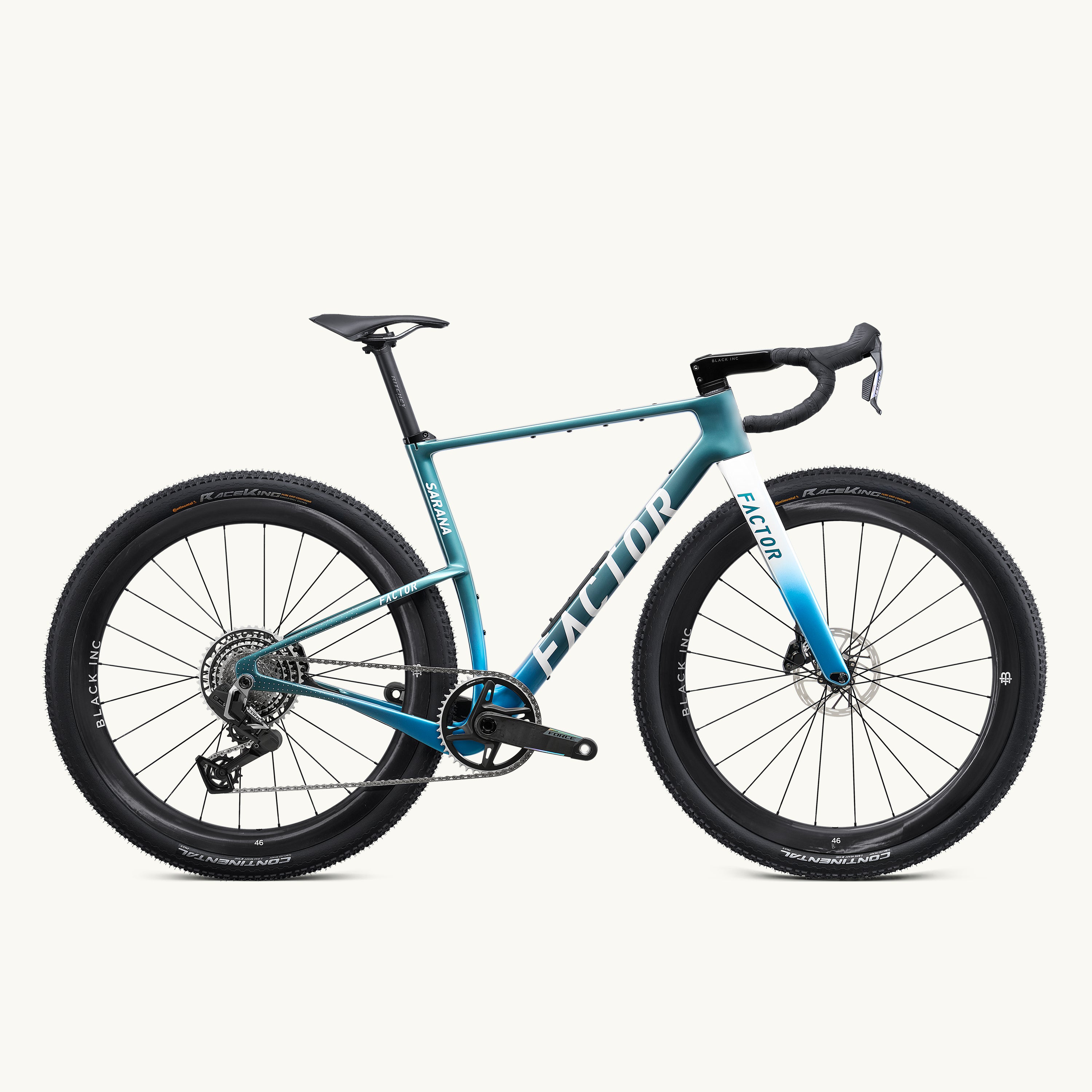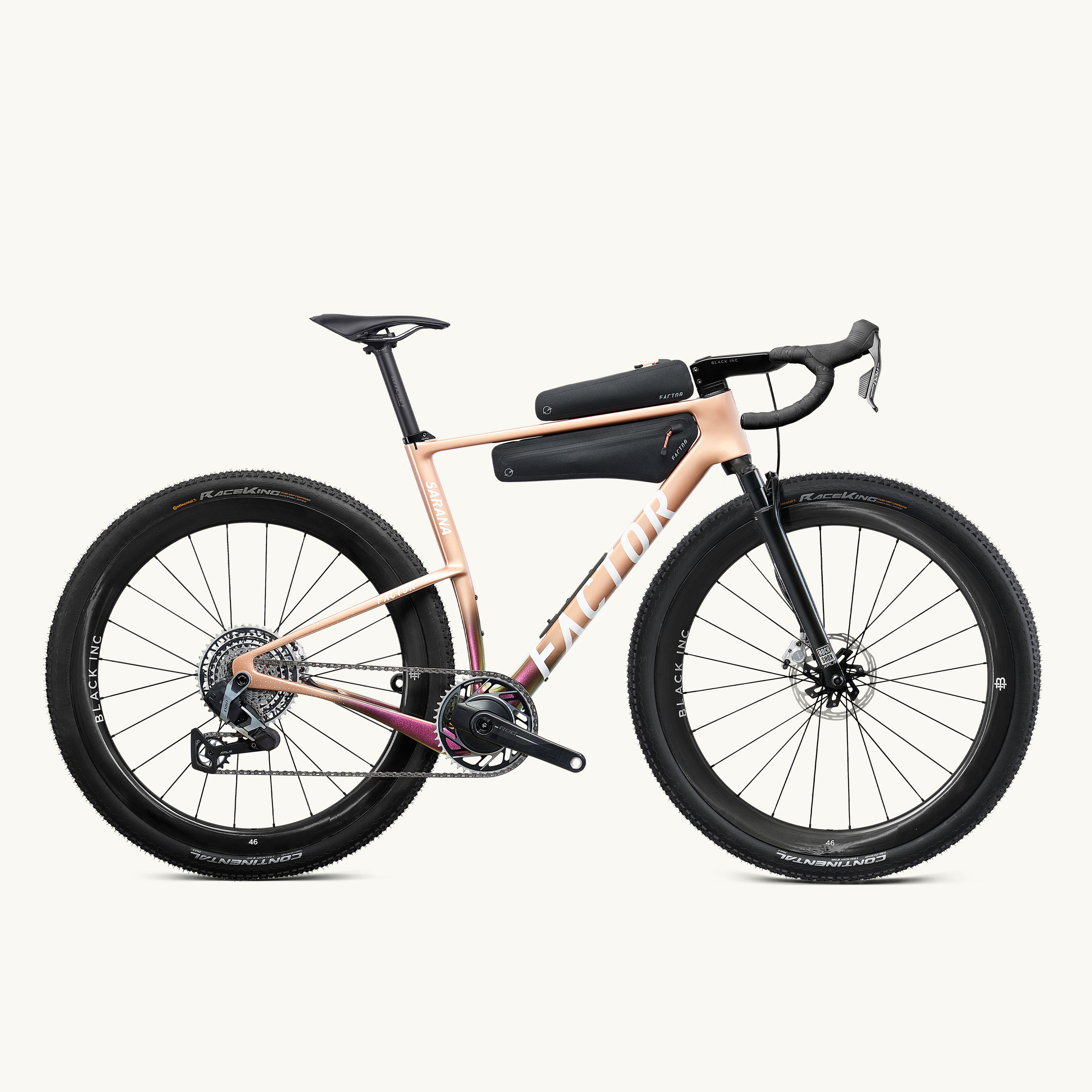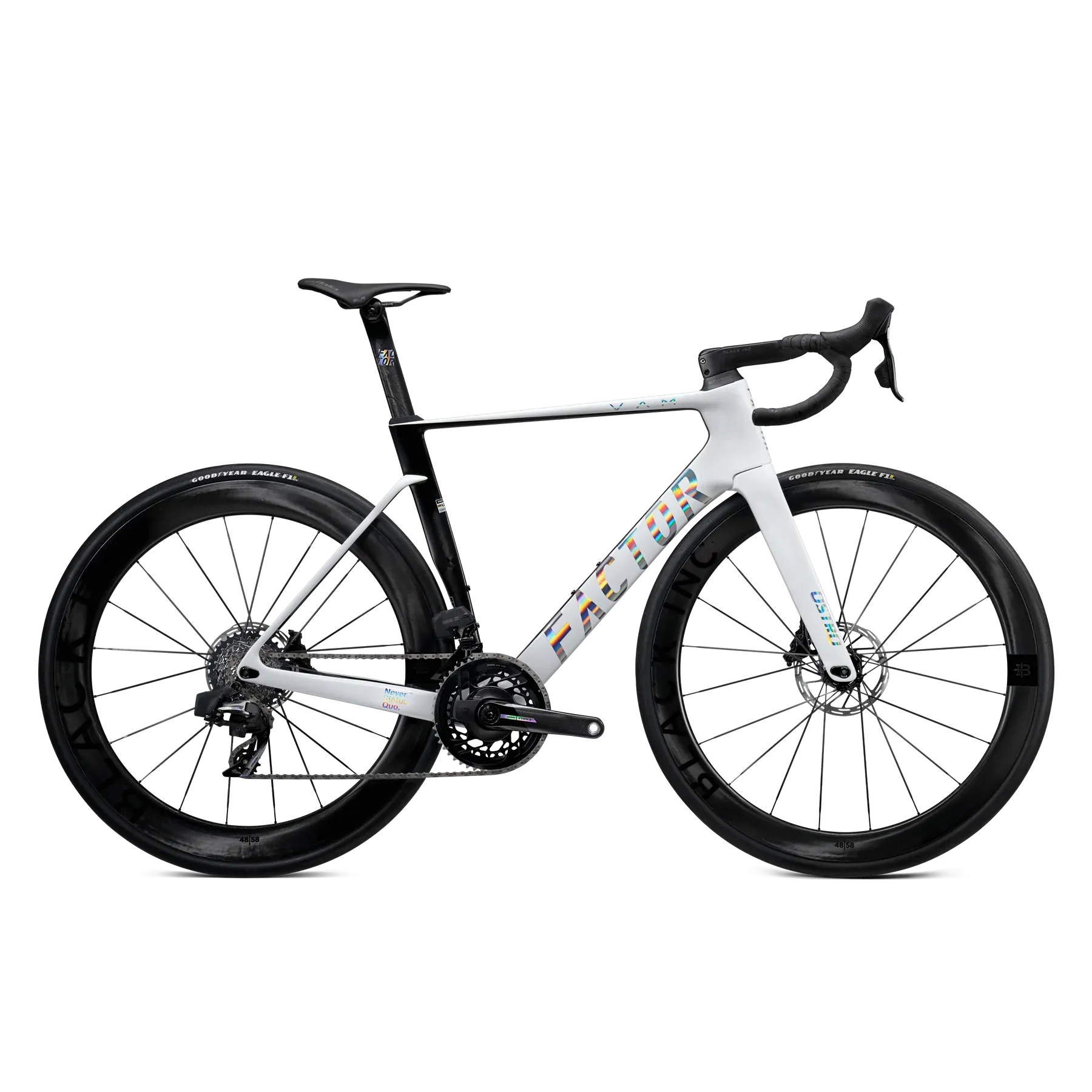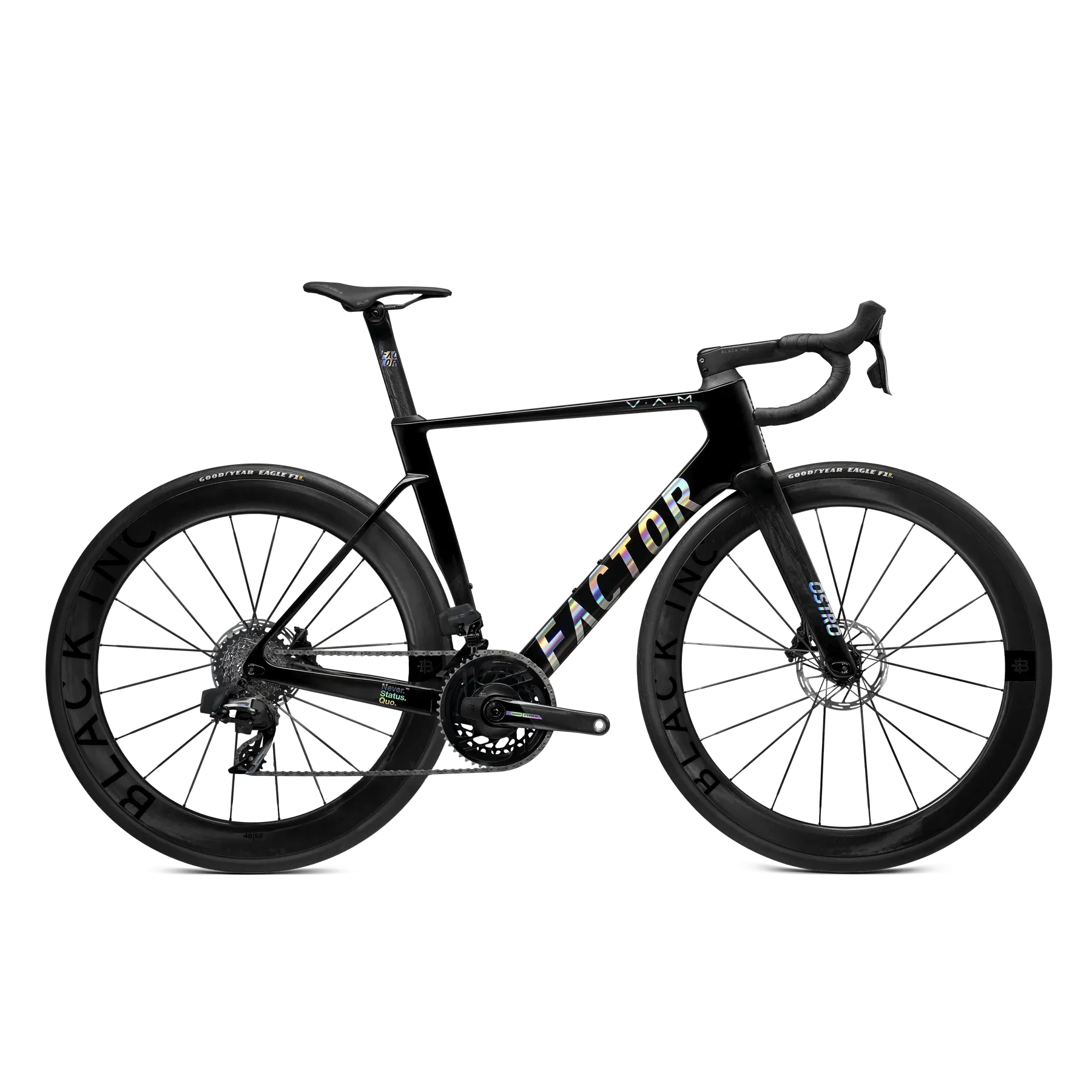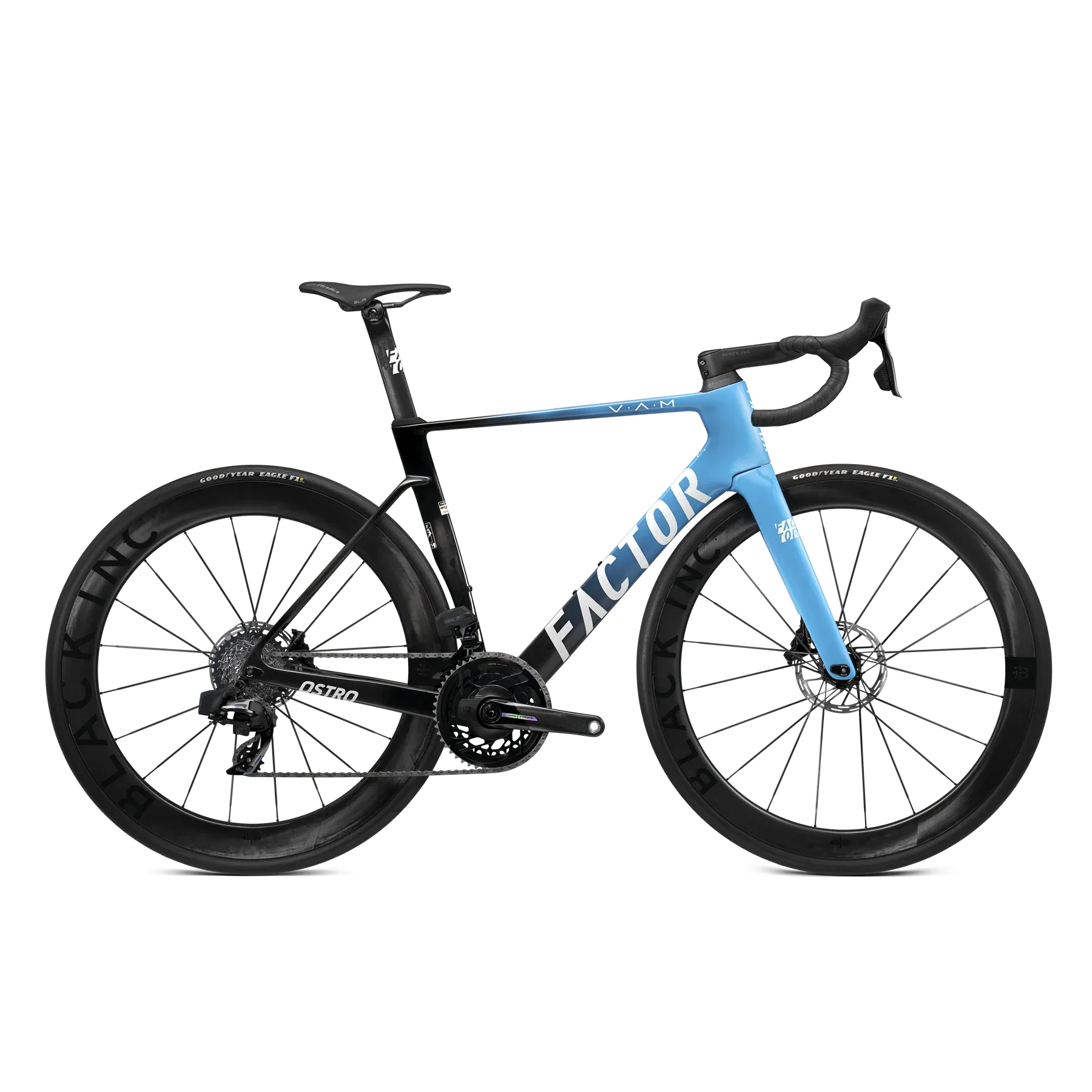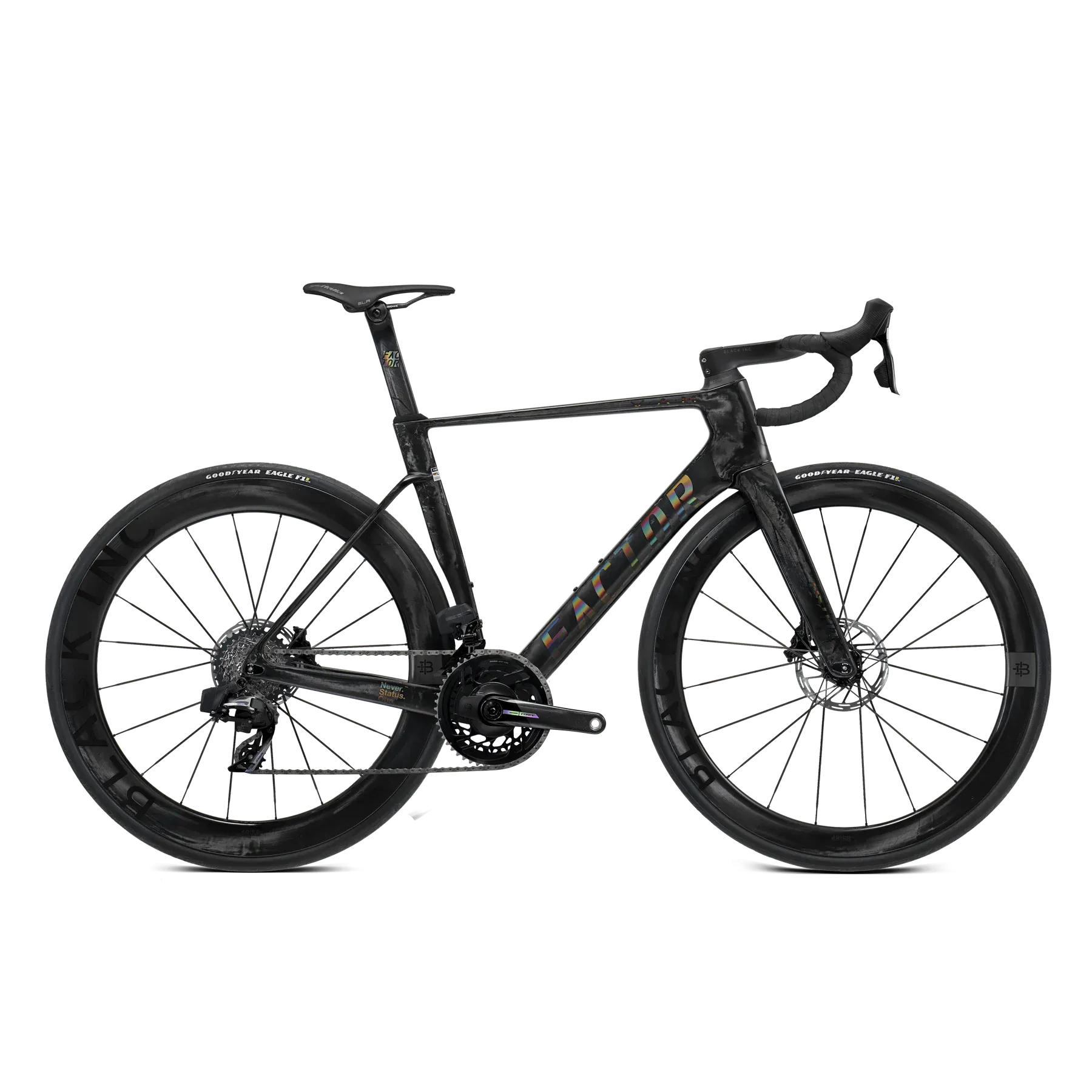




Factor Sarana: where speed meets distance
The new Factor Sarana represents Factor's deliberate expansion into the gravel spectrum. The brand, with a heritage deeply rooted in road cycling, aerodynamic perfection, and uncompromising speed, first brought that same philosophy to the OSTRO Gravel, then to the ALUTO, and now to a new platform specifically created for ultra-distance racing.
The Sarana has been developed for events measured in days, not hours. Races where the cyclist is completely self-sufficient and where performance depends as much on efficiency and resilience as on pure speed. Races that cross countries, span days and nights, and where the cyclist is their own mechanic, their own navigator, and sometimes, their own worst enemy.

Why the Sarana exists
Factor explains that, when exploring the world of ultra, it found a new expression of what it means to compete. The speeds, durations, and demands were different from anything they had optimized before, but the principles remained the same: efficiency, responsiveness, and control.
The Sarana is Factor's interpretation of what a true ultra-race bike should be. It completes its gravel range and redefines how far performance can go.
How it started
The idea was born within Factor's engineering team with a clear question: what would a Factor built specifically for ultra-distance racing look like?
At the time, the team was finishing the ALUTO, working on how geometry and lay-up could balance agility and comfort in mixed-surface races. In parallel, another conversation began to take shape, driven by Canadian ultra-racer Rob Britton, whose competitive approach caught the team's attention.
Britton had earned a reputation for tackling some of the world's toughest self-supported races, from Unbound XL to BC Epic, with the same discipline and precision as a WorldTour rider. His style wasn't about adventure: it was about control, efficiency, and pace management over enormous distances.
Working directly with him, the engineering team translated that mindset into design parameters. They studied how fatigue changes bike behavior, how load modifies the center of gravity, and how efficiency can be maintained long after comfort disappears.

What it represents within the Factor range
Factor defines its gravel trilogy as follows:
- OSTRO Gravel: race speed.
- ALUTO: race balance.
- SARANA: race endurance.
The Sarana goes a step further. It is designed for the longest and toughest races on the planet. It's not a bike built to survive, but to offer sustained performance in the most demanding conditions imaginable.
It's not an "all-road" compromise, but a focused tool for a very specific type of cyclist: one who treats distance as a race, not an escape.
Design and engineering
Factor summarizes the engineering approach with a simple question: how can a race bike remain fast when the rider can no longer think about speed?
The answer begins with the frame. It's a completely new design, built around three ideas: stability, efficiency, and storage in a single, continuous form.
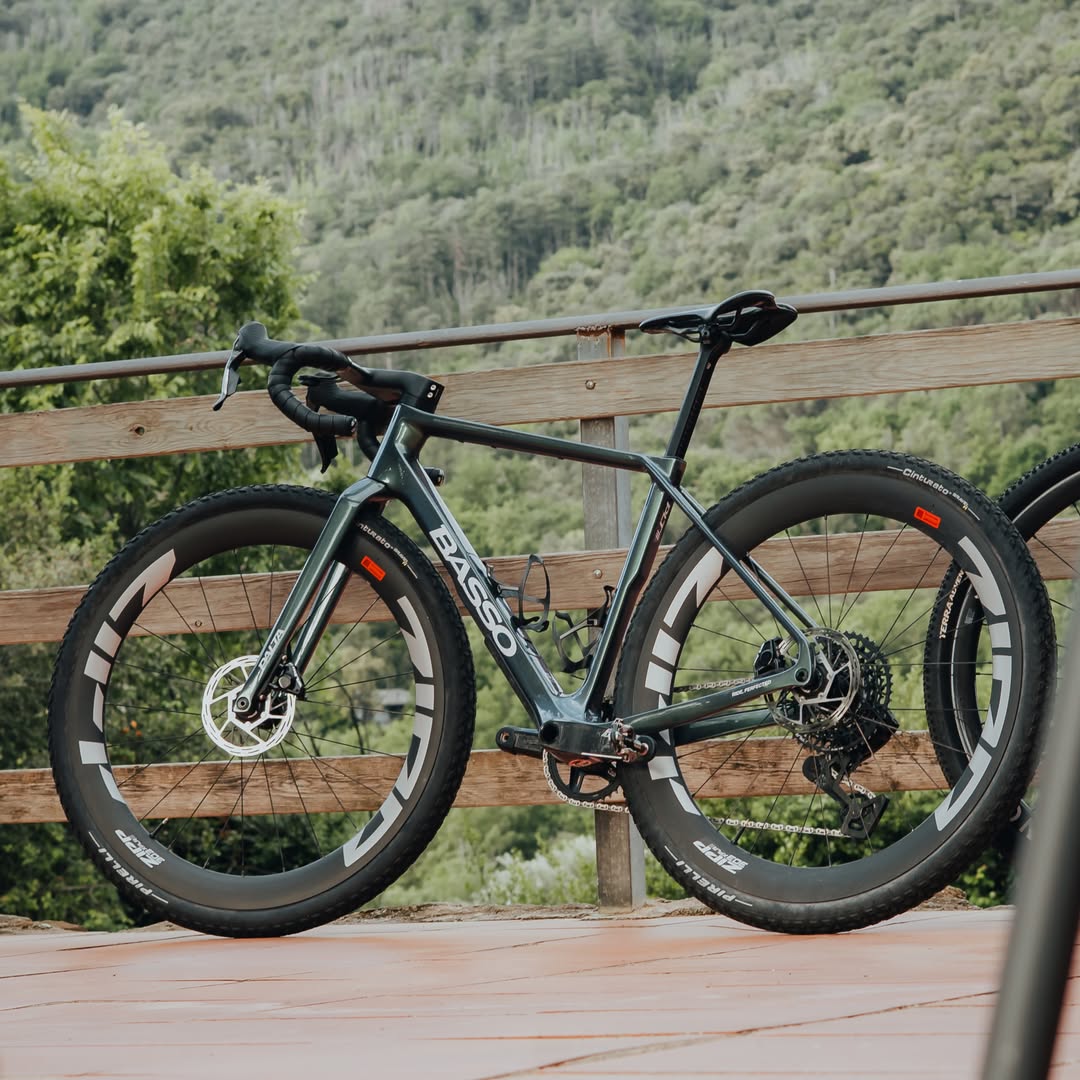
The down tube is the backbone of the bike: oversized to provide torsional rigidity and aerodynamics, but hollowed out internally to house an integrated storage compartment large enough for tools, spares, and nutrition. The idea is that the rider can carry what they need without altering airflow or bike balance.
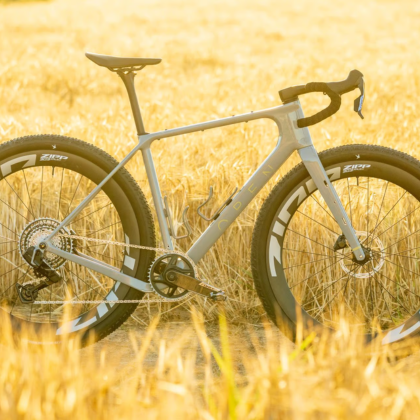
At the rear, the Sarana incorporates a leaf-spring seat stay system. The dropped seat stays and a subtly offset seat tube generate in-plane flex that smooths out vibrations, while maintaining lateral power transfer. The lay-up is directional: high-modulus fibers channel power to the bottom bracket and chainstays, while intermediate layers manage fatigue and traction over rough terrain.
Geometry
The Sarana's geometry is born from competition, not comfort. Factor highlights a head angle of 71.5°, 425 mm chainstays, and a bottom bracket with 80 mm of drop to offer precise and predictable handling, with a centered mass. The bike maintains its line when loaded, but remains responsive at speed.
The stack and reach proportions are adjusted to maintain control when fatigue sets in, allowing the rider to stay low and efficient without collapsing their posture.
Key systems
- Frame: full carbon monocoque with directional lay-up tuned for lateral stiffness and in-plane compliance.
- Down tube: large-section aerodynamic storage system with integrated AirTag slot.
- Seat stays: leaf-spring design for controlled flex response.
- Seatpost: 30.9 mm, dropper post compatible.
- Drivetrain: 1x only, UDH compatible and maximum 52-tooth chainring.
- Tire clearance: 29 x 2.2” (57 mm OD).
- Bottom bracket: T47 wide (85.5 mm shell / 47.5 mm chainline).
- Discs: 160 / 180 mm compatible.
- Fork: rigid or with 30 mm travel.
- Finishes: dual matte/gloss texture in metallic blue and gold colors.
- Sizes: 49 / 52 / 54 / 56 / 58 / 61.
Validation in real-world use
Factor makes it clear that testing the Sarana wasn't about checking boxes, but about finding the limits of endurance and understanding how the bike performs when everything else starts to fail.
Rob Britton was both test rider and collaborator. For months he rode in British Columbia through heat, rain, altitude, and isolation, pushing each iteration of the Sarana through a punishment that only true ultra-tests can offer.
For the final prototype, the data told the same story as the rider:
- 18% less vibration amplitude compared to previous endurance prototypes.
- Zero structural stiffness drift after a 40-hour continuous simulation.
- Stable steering and aerodynamic balance even with bag configurations at 30–40 km/h.
The Sarana doesn't chase adventure. It brings competition to places it hasn't been yet.