

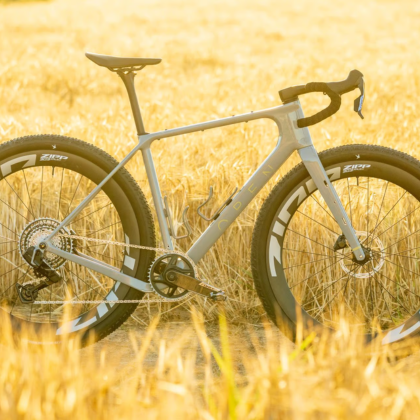


Gravel is no longer a single category. Under the same label, bikes designed for high-speed competition, multi-day travel, connecting roads and trails, or tackling paths that a few years ago would have belonged exclusively to mountain biking, coexist.
The difference between a Gravel Race bike and a Gravel Adventure bike is not limited to weight or the number of frame mounts. The geometry, rider's posture, tires, gearing, wheels, carrying capacity, and above all, the design priorities change.
One seeks to complete a route in the shortest possible time. The other tries to keep you moving when the route becomes unpredictable.
Gravel Race
Faster
- More aerodynamic position.
- Fast and precise steering.
- Light and stiff frame.
- Fast tires.
- Minimal equipment.
Gravel Adventure
More Capable
- More relaxed position.
- Greater stability.
- More tire clearance.
- Shorter gears.
- More cargo options.
The Essential Difference
A Gravel Race bike is optimized for maintaining speed.
A Gravel Adventure bike is optimized for maintaining possibilities.
Before comparing
There are no two completely closed categories
Gravel functions as a spectrum. At one end, we find bikes very close to a road machine, but with greater tire clearance. At the other, models with large volume tires, stable geometries, and the ability to carry luggage.
Between these two extremes, there are versatile bikes capable of competing, doing long rides, and even traveling with light luggage.
Therefore, it is advisable to analyze each bike by its actual characteristics and not solely by the term used in its commercial specification sheet.
The Gravel Spectrum
Speed
Balance
Versatility
01 · Geometry
The frame shape determines how the bike feels
Geometry influences posture, weight distribution, steering responsiveness, and stability. Two bikes with the same components can offer opposing sensations if their geometries are different.
GRAVEL RACE
More Direct
Lower and more extended to reduce frontal area.
Fast reactions and precise trajectory changes.
More load on the front wheel and sporty feel.
Agile and efficient when riding at high speed.
GRAVEL ADVENTURE
More Stable
Slightly more upright to reduce fatigue and improve control.
More progressive and predictable on technical terrain.
More centered position to control the bike and luggage.
Stable on descents, loose surfaces, and long rides.
Two Important Measurements
STACK
Indicates the vertical height of the front end relative to the bottom bracket. A higher stack facilitates a more upright position.
REACH
Represents the horizontal distance of the front end relative to the bottom bracket. It influences how much the rider extends.
These figures should be analyzed together with the stem, handlebars, spacers, saddle setback, and the rider's proportions.
Dog Days Insight
A race posture does not necessarily make you faster if you cannot maintain it throughout the entire ride.
02 · Tires
The Connection Between the Bike and the Terrain
In gravel, tire choice can change a bike's behavior more than many much more expensive component modifications.
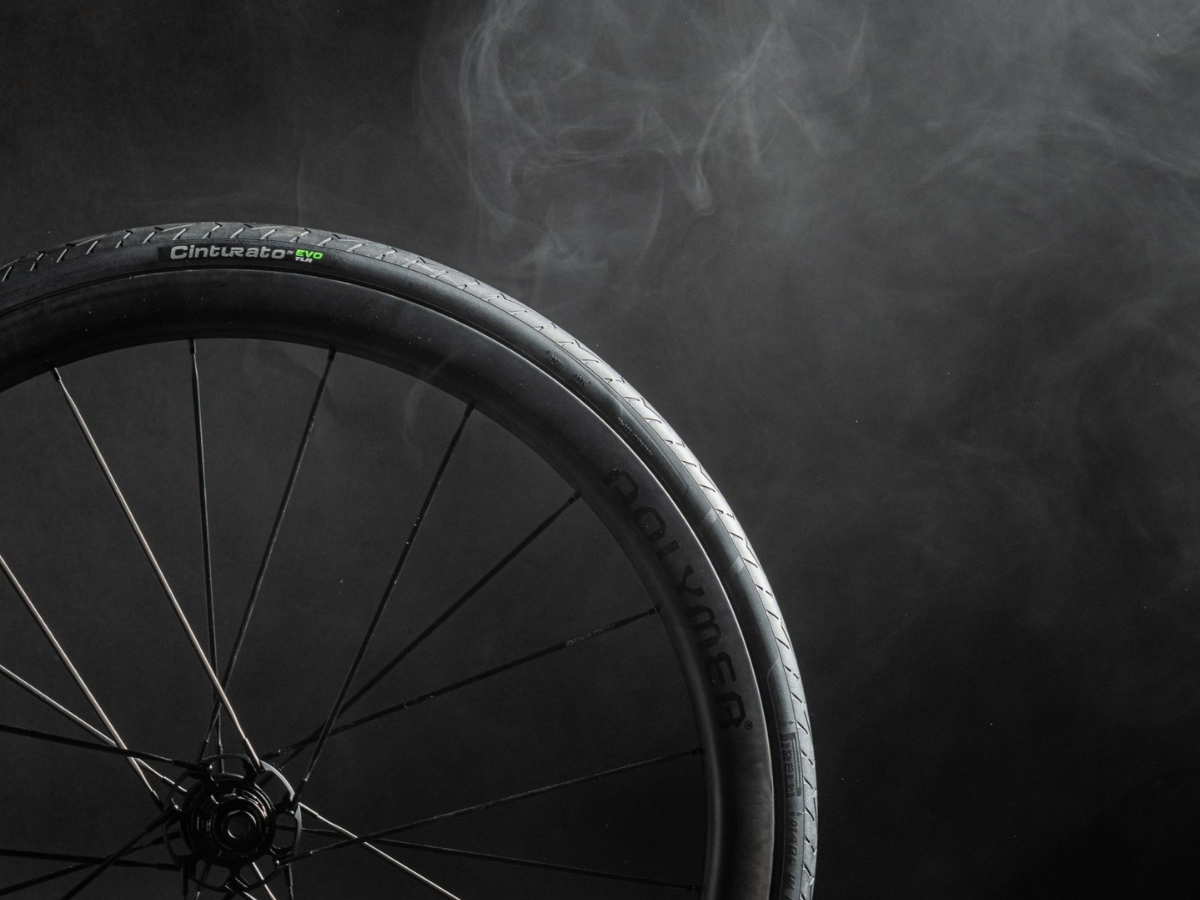
Width, tread pattern, casing, and pressure determine rolling resistance, grip, shock absorption, and impact protection.
RACE
Lower resistance and faster tread
ADV.
Greater volume, grip, and protection
| Feature | Gravel Race | Gravel Adventure |
|---|---|---|
| Priority | Speed and efficiency | Grip, protection, and comfort |
| Tread Pattern | Smooth center or small knobs | More pronounced and spaced knobs |
| Casing | Flexible and light | More protected against cuts |
| Volume | Controlled to limit weight and aerodynamic drag | Larger to reduce pressure and absorb bumps |
| Ideal Terrain | Fast trails, compact gravel, and asphalt | Rocks, loose terrain, and technical routes |
Tire clearance doesn't mean you have to use the maximum
Just because a bike can fit a very wide tire doesn't mean you should always use it.
Generous tire clearance expands configuration possibilities. You can mount a fast tire for racing and switch to a larger volume one when the terrain or journey requires it.
03 · Aerodynamics
It also matters off-road
In a fast gravel race, a significant portion of the time can be spent at speeds where air resistance represents a considerable loss.
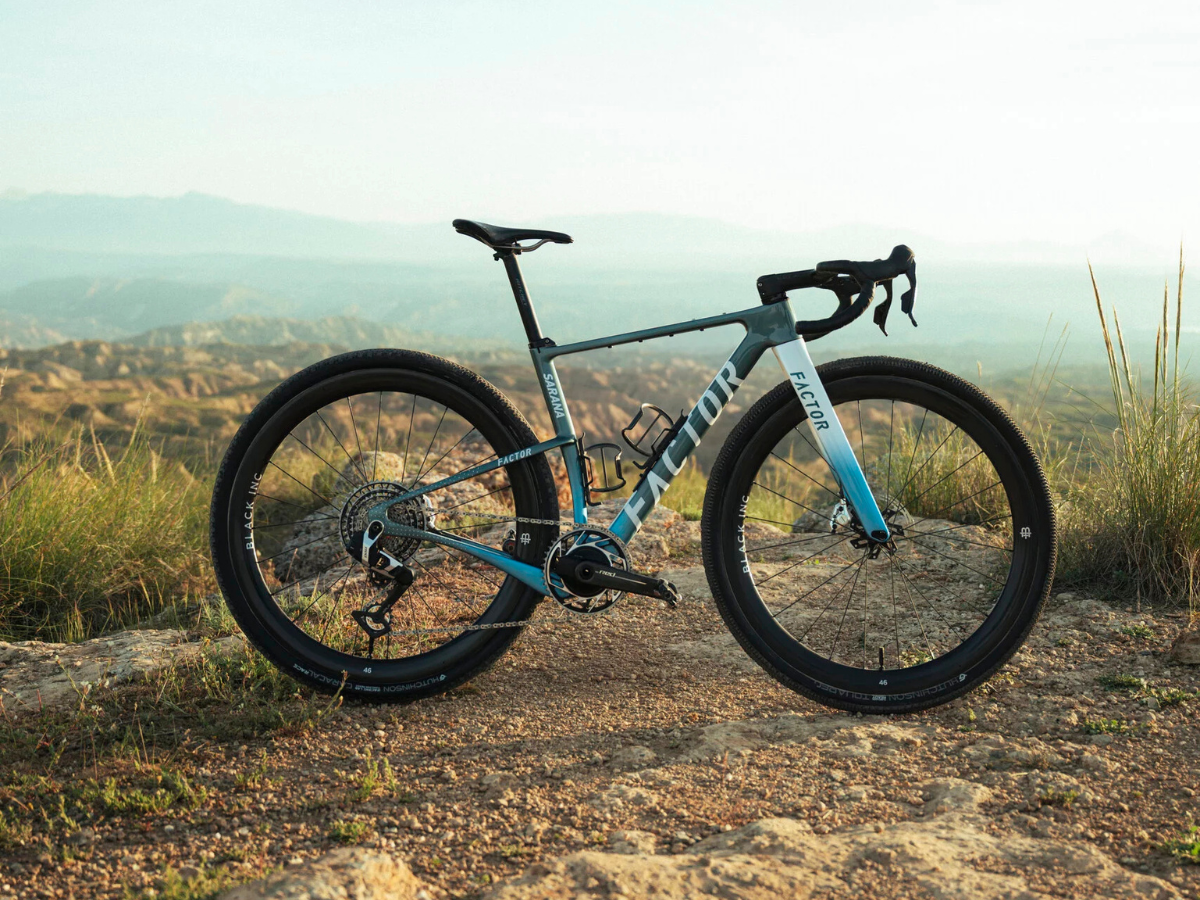
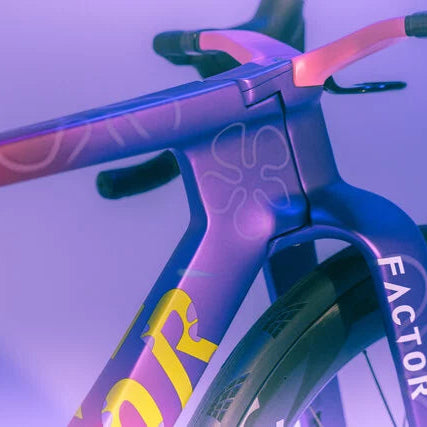
That's why Race bikes adopt tube profiles, integrated cabling, narrow handlebars, and road-inspired positions. The Factor OSTRO Gravel, for example, is expressly presented as a competition bike that combines aerodynamics, low weight, stiffness, and capability for gravel tires.
Common mistake
Thinking that aerodynamics only matters to professionals. What changes between cyclists is not whether there is air resistance, but how much time they spend at speeds where its effect is decisive.
04 · Drivetrain
Close ratio vs. climbing ability
RACE
Aims to maintain efficient cadence at high speeds and reduce jumps between gears.
- Relatively long gear ratios.
- Closer gear steps.
- Priority on maximum speed.
- 1x or 2x configurations depending on the route.
ADVENTURE
Aims to maintain a manageable cadence on steep climbs, technical terrain, and loaded bikes.
- Shorter gear ratios.
- Wide-range cassettes.
- Better loaded climbing capability.
- Less emphasis on maximum speed.
1x vs 2x
1×
Simplicity, chain retention, and fewer exposed parts. May result in larger jumps between gears.
2×
More gears and closer spacing. Can be useful when combining a lot of asphalt with fast tracks.
No configuration belongs exclusively to one category. The choice depends on the terrain, physical condition, and the range of gears needed.
05 · Wheels
Speed, durability, and ease of repair
Gravel Race wheels usually prioritize weight, stiffness, and aerodynamics. Adventure bike wheels must withstand impacts, luggage, and more unpredictable conditions.
Especially relevant in fast races and open terrain.
Determines how the tire seats and its actual size.
Fundamental on rocky terrain, steps, and routes with luggage.
On long trips, reliability and spare parts availability become more important.
06 · Weight
How much does it really matter?
A lightweight bicycle accelerates more easily and requires less energy to overcome elevation gains. However, reducing weight can conflict with durability, tire clearance, storage, or luggage carrying capacity.
Race
Less mass and immediate response.
Adventure
More structural and functional margin.
What physics says
Weight particularly affects climbing and acceleration. On fast, flat terrain, posture, tires, and aerodynamics can matter more than a small difference in mass.
07 · Comfort and control
Comfort can also lead to performance
A bicycle that reduces vibrations and allows for a stable posture can help you conserve energy, precision, and decision-making ability for longer.
Especially on long rides.
More control when the terrain gets tricky.
The tire maintains better contact with the ground.
Technical fatigue also impacts performance.
08 · Luggage and storage
The big functional difference
Race
Aims to carry only the essentials: tools, nutrition, hydration, and mandatory gear.
Adventure
May include mounts for bags, racks, fenders, additional water bottles, and expedition accessories.
09 · Cockpit
Precision vs. control
Competition bikes tend to use narrow, integrated cockpits to reduce aerodynamic drag.
Adventure-oriented bikes often favor handlebars with more flare, more hand positions, and greater ease of installing bags or accessories.
RACE
Narrower and more aerodynamic
ADVENTURE
Wider and control-oriented
Three ways to interpret premium gravel
Factor, Basso and OPEN
FACTOR OSTRO GRAVEL
Race
Aerodynamics, stiffness, integration, and low weight oriented for competition.
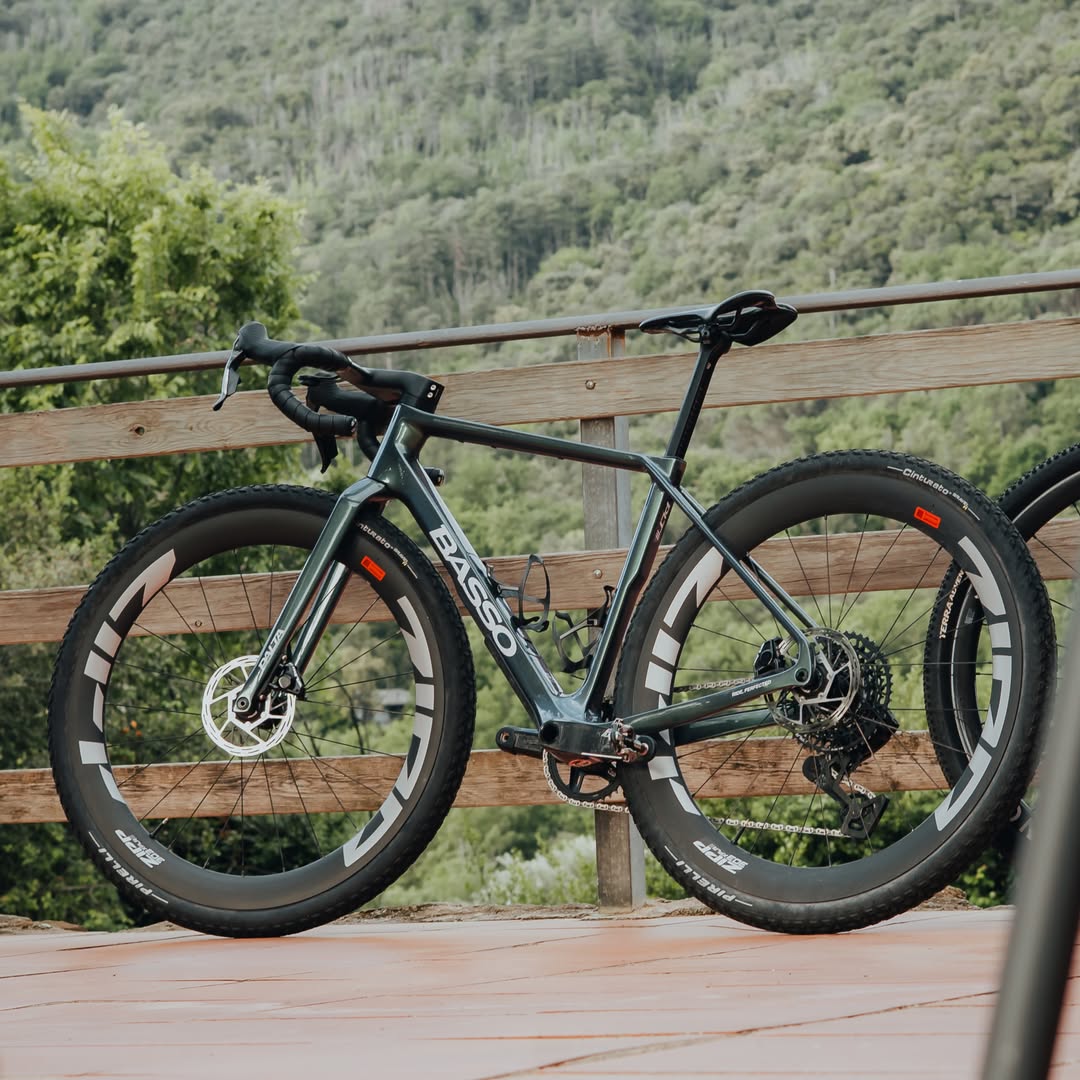
BASSO PALTA III
All-round
Aims to combine performance, ample tire clearance, and capability for different types of gravel.
OPEN U.P.
Fast versatility
Performance geometry with compatibility for high-volume tires and different configurations.
The classification is indicative. The final setup can shift the same platform towards a faster or more adventurous use.
Full comparison
Race vs Adventure
| Element | Gravel Race | Gravel Adventure |
|---|---|---|
| Priority | Speed and efficiency | Control and versatility |
| Riding position | Low and extended | More upright and relaxed |
| Steering | Fast and direct | Stable and predictable |
| Tires | Fast and relatively light | Wider and more protected |
| Drivetrain | Ratios for maintaining speed | Short gears and wide range |
| Wheels | Light, stiff, and aerodynamic | Robust and impact-ready |
| Luggage | Minimal | Multiple loading options |
| Maintenance | Integration and performance | Accessibility and ease of repair |
| Ideal use | Races and fast rides | Tours, technical routes, and self-sufficiency |
Decision
Which one should you choose?
Choose Gravel Race if...
- Your priority is competing or riding fast.
- You come from road cycling and like a sporty position.
- Most of your routes are on fast tracks.
- You don't plan to carry much luggage.
- You especially value weight, stiffness, and aerodynamics.
Choose Gravel Adventure if...
- You want to explore very different terrains.
- You plan to go bikepacking or on multi-day trips.
- You prioritize stability, grip, and comfort.
- You need to carry water, clothes, or luggage.
- You want a forgiving bike for difficult terrains.
The intermediate option
What if I want an all-around bike?
For many cyclists, an all-round platform can be the most logical choice: sporty but not extreme geometry, wide tire clearance, and the possibility of changing the bike's character through tires, wheels, and drivetrain.
Rolling tire and minimal equipment.
More volume, grip, and protection.
Short gearing, bags, and cargo capacity.
Myth vs reality
Ideas worth reviewing
A Gravel Race bike cannot do long rides.
It can do them, but its posture and cargo capacity may not be the most suitable.
A Gravel Adventure bike is always slow.
With fast tires and no luggage, it can offer very high performance.
The wider the tire, the better.
The size must adapt to the terrain, wheel, pressure, and speed.
The lightest bike is always the best.
A bike must be sufficiently strong and functional for its intended use.
Purchase checklist
The questions you need to answer
Conclusion
There is no single best gravel bike
There is the bike that best suits the type of gravel riding you actually do.
A Gravel Race bike can be extraordinarily fast, precise, and efficient, but it loses some of its purpose if most of your rides are technical, relaxed, or laden with luggage.
A Gravel Adventure bike can offer control, comfort, and freedom, but it adds weight and resistance that you might never need if you only aim to compete on fast tracks.
The right choice starts with defining the route, not by choosing the frame.
SEO FAQ
Frequently asked questions
What is a Gravel Race bike?
It is a gravel bike designed primarily for racing or high-speed riding. It usually prioritizes aerodynamics, low weight, stiffness, responsiveness, and a sporty riding position.
What is a Gravel Adventure bike?
It is a bike designed for long rides, exploration, varied terrain, and carrying luggage. It prioritizes stability, comfort, tire clearance, and cargo capacity.
Can I go bikepacking with a Gravel Race bike?
Yes, especially with light bags that don't require specific mounts. However, its geometry, gearing, and cargo capacity may be less appropriate for long trips.
Can a Gravel Adventure bike be used for racing?
Yes. With fast tires, a suitable position, and minimal luggage, it can perform very well. It will typically be less aerodynamic and slightly heavier than a purely Race bike.
Is a 1x or 2x drivetrain better for gravel?
It depends on the use. 1x offers simplicity and chain retention. 2x provides more gear ratios and smaller steps, which is useful when combining asphalt with fast tracks.
What tire width do I need?
For fast tracks, a relatively narrow and rolling tire can work. For rocky, loose terrain, or technical routes, increasing volume, grip, and protection is useful.
What type of gravel bike is the Basso Palta III?
The Palta III is in a versatile zone. It combines performance orientation with wide tire clearance and configuration possibilities for competition, long rides, and adventure.
What type of gravel bike is the Factor OSTRO Gravel?
The OSTRO Gravel is clearly oriented towards Gravel Race. It prioritizes aerodynamics, integration, low weight, stiffness, and competitive behavior.
References and sources
- Factor Bikes: OSTRO Gravel: features, design, and competitive focus.
- Basso Bikes: Palta III: specifications and intended use.
- Basso Bikes: Palta III Tech: tire clearance and performance with high-volume tires.
- OPEN Cycle: OPEN U.P.: performance geometry and versatility.
- UCI: UCI Gravel World Series 2026.